HAPPINESS AND SPACE
All our lives, we strive to be ‘happy’. In our good wishes we usually ask first for health, then straight after for happiness; we feel the need to give meaning to everything we do through the satisfaction of being happy. Yet when we try to define happiness — so that we know what it is we are actually reaching for — most of us struggle to find the right words. The concept of happiness, which we tend to generalize around notions such as feeling content and fulfilled with life and what we have, a balanced state of mind, and inner peace, in fact begins, at its most basic, with our needs being adequately met.
As we all know, at the very top of our basic needs — right after food and drink for survival — comes shelter. We know that since their earliest existence, throughout history, people have built all manner of structures to meet this need. In the beginning, caves and natural shelters answered the need for protection and refuge; over time, as social structures and cultural values changed, people’s perception of space and their housing needs evolved as well. From natural shelters to more advanced dwellings, and then — as architecture began to develop in antiquity — to ever more complex structures, aesthetic concerns began to come into play alongside functionality.
And then, of course, the greatest turning point on the road to today’s understanding of housing was the Industrial Revolution. As we know, industrial production techniques and the use of materials changed dramatically with it. As a result, producing standardized homes became far easier. Once modern amenities such as electricity, water, and heating started to become standard in homes, the balance between aesthetics and functionality steadily gained importance.
So what lies beneath this notion of aesthetic sensibility? How does the aesthetic concern we feel in so many areas show itself in all the physical spaces we live in and that surround us? At this point, in light of technology’s ever-accelerating development, we need to look at the psychological effects of ‘urbanization and modernization’ on people.
We can all safely say that the places where we spend the most time today are, without question, our homes and our workplaces. In everyday life, our brains are constantly affected — directly or indirectly — by the physical conditions these spaces do or do not offer us; in a sense, every connection formed in our minds takes shape as it passes through this tangible filter. As a consequence of the ongoing global trend of urbanization, more than 50% of the world’s population now lives in cities, and that share keeps growing. In metropolitan life especially — on streets and roads, in commercial areas, in our workplaces, and ultimately in our apartments — we feel the impact of the built environment intensely. So, in truth, everything we are exposed to also profoundly shapes our psychology.
That being so, everything around us that strikes our eye as ‘beautiful’ does our soul good — it is simply part of being human. Although beauty is, in general, a concept that varies with each person’s sensory experience, cultural background, personal preferences, and surroundings, when it comes to the physical environment most of us can agree on certain basic criteria. Spaces that have not severed their ties with nature — spaces that make us feel we are part of it — do all of us good. Because since our very beginnings, we have carried within us the urge to form an inner bond with nature and to feel we belong to it. Walking along a calm, safe road lined with trees on both sides and brightened by birdsong will make no one feel bad. And no one would choose a room whose window looks out on worn, neglected apartment blocks over one that looks out on lush green trees.
[ux_image id=”4515″]
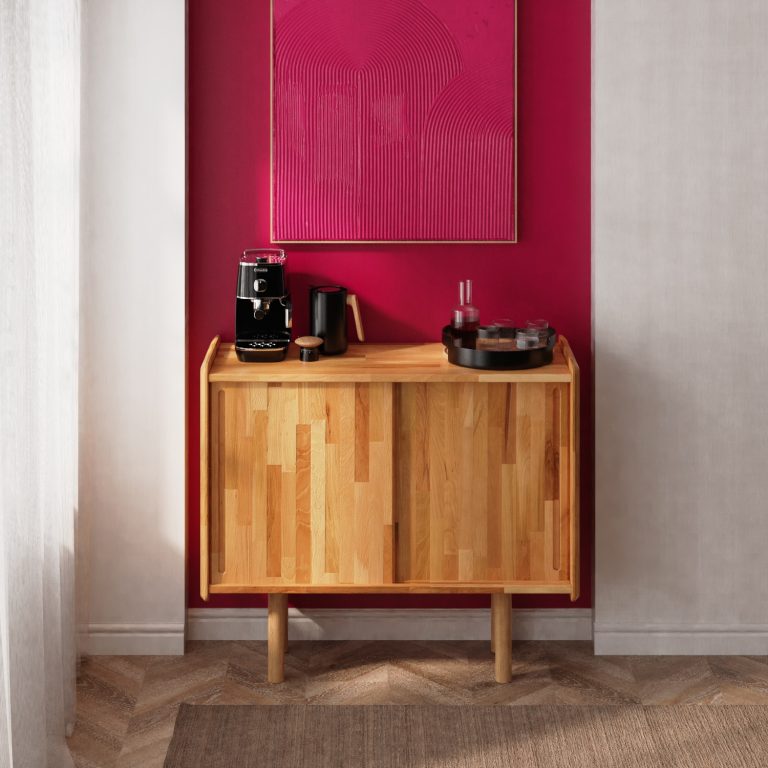
This is exactly where the need to ‘beautify’ the homes we live in enters the picture. Today, it is fair to say this need carries many layers of meaning beyond simply wanting things to please the eye. When we step into a home that has been thoughtfully and carefully decorated, our first impression is a positive one. We scan the space with our eyes and try to work out what it is we like about it. When the materials, colors, furnishings, and objects come together as a coherent whole, they create an image of a higher quality of life for the person living there.
Whether or not we take an interest in decorating, we all live in homes, and even at the most basic level we inevitably make certain choices about them when the need arises. At this point, everyone has either heard — or personally used — the following: natural tones, nature-inspired materials, natural textures, natural light… Most of us want to see pieces in our homes that reference nature and carry traces of it. At the very least we keep houseplants, try to keep something green alive, and feel wonderful in a space full of plants. Because it is a scientific fact that living close to nature increases people’s happiness and peace of mind. Green spaces, open sky, and natural light in particular lift people’s mood and reduce stress. That is why we find common ground in the desire to connect with nature through architectural design. In today’s dense, exhausting city life, so far removed from nature, this is a ‘beautification’ approach we lean toward a great deal.
While we are on the subject of drawing inspiration from nature, another point worth touching on is the sense of ‘belonging’. We all shape our living spaces according to our own tastes; in a sense, we feel the need to project our inner world onto our most private spaces and, through them, to express ourselves. The way we dress, the words we use, our taste in food… In short, all of our preferences make up who we are, and we project ourselves to those around us through these choices — sometimes without even needing to speak. Naturally, we begin with the living spaces that belong entirely to us, where we can express ourselves most freely. At the same time, the need to feel we are part of nature also finds its way into the choices we make as we try to reflect our identity in our spaces.
Alongside all this, when discussing the desire to improve the spaces we spend our time in, we should also mention functionality and usability. Of a well-designed space, one should also be able to say that it has been optimized as ergonomically as possible to meet its user’s needs. Such a space allows a person to go about daily life more easily and comfortably. These days, many of us find ourselves living in ever-shrinking — and therefore sometimes impractical — homes. Think about it: when touring an empty home, for instance, beyond its visual qualities we first look at the layout of the rooms and whether it offers an ideal way to live. It is largely by this criterion that we judge whether it is ‘beautiful’. In other words, functionality, defined by our needs, plays a major role in the value judgments we form about spaces.
Which brings us to a matter we cannot leave out, especially under today’s conditions — social prestige, which finds its way into almost every corner of our lives. It is an undeniable truth that as we project our identity onto the spaces we live in, we also tend to express our social status. Living in a prestigious, beautiful place reinforces the image of high standing in society, and the supposed necessity of having it is constantly impressed upon us through methods the capitalist order knows all too well. The need for status, and the desire to build stronger social bonds with ‘people like us’, may well be part of human nature — but in an age when the whole world is ‘at our fingertips’, this need feels ever more important. Yet when we rank what truly matters to us, putting social prestige above everything else can sometimes carry us further from what we are really searching for. The beautiful homes in which we express ourselves, and the beautiful places we spend time in, matter first and foremost for our own comfort and well-being.
To sum up: the desire to be in beautiful spaces, and to beautify the spaces we are in, can be explained through many more objective and subjective lenses. But we can say plainly that the relationship between space and happiness is one of the cornerstones of architecture. In truth, we are all engaged in a constant search for spaces that will make our lives more meaningful and happier. The effect of closeness to nature, the positive impact beautiful spaces have on people, and the social-psychological dynamics at play all underline the importance of architectural design in enhancing human well-being. Creating beautiful, functional spaces has therefore taken on an importance we might now almost call ‘vital’ for increasing people’s happiness and quality of life. That architectural design not only meets people’s physical and emotional needs but also lifts their spirits and strengthens their social bonds is, perhaps, modernity’s most ‘beautiful’ gift to us.
Canan PERVİS